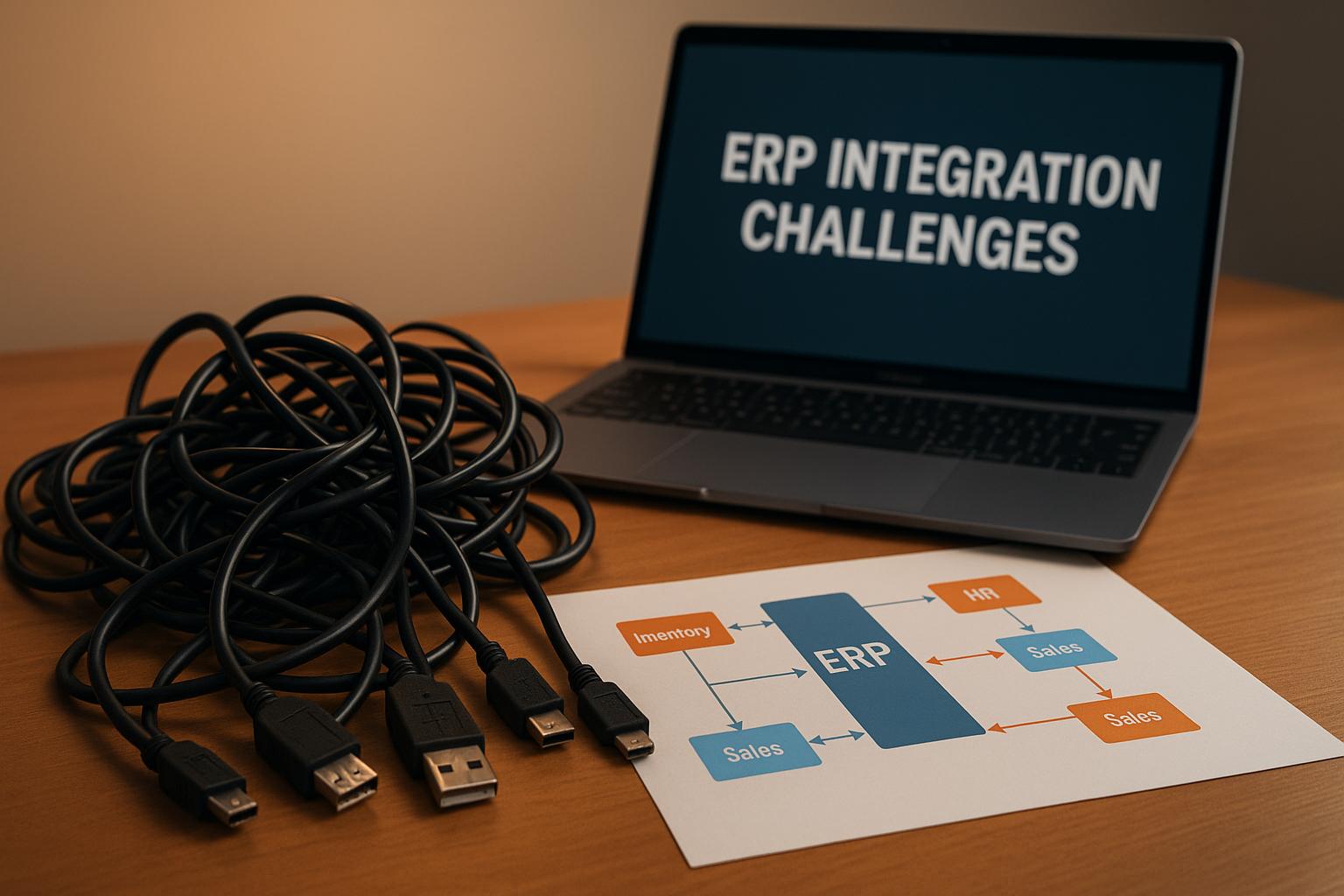
Custom APIs bridge the gap between ERP systems and other tools like CRMs, e-commerce platforms, and supply chain software. Unlike standard APIs, they address specific business needs, automate workflows, and improve data synchronization.
Key Benefits:
- Automation: Reduces manual tasks like data entry, saving time and minimizing errors.
- Data Integration: Centralizes data across systems for better decision-making.
- Cost Savings: Avoids expensive direct connectors, cutting integration costs by up to 50%.
- Use Cases: CRM-ERP integration for real-time customer data, e-commerce-ERP connections for inventory updates, and supply chain automation to manage stock and shipments.
Implementation Steps:
- Define integration goals and identify pain points.
- Select tools like unified API platforms or iPaaS for scalability.
- Ensure robust security measures and compliance with regulations.
Emerging trends include unified API platforms, AI-driven analytics, IoT integration, and modular designs for scalability. These advancements make ERP systems more connected and efficient, supporting modern business needs.
Key Benefits of Custom API Development in ERP Systems
Streamlining Business Processes
Custom APIs take manual, time-consuming tasks and turn them into automated workflows. For example, integrating your CRM with your ERP system using a custom API ensures customer information updates automatically across both platforms. This eliminates duplicate data entry, reduces human error, and frees up your team to focus on higher-level tasks like strategy and innovation.
But automation doesn’t stop at basic data entry. Custom APIs can manage more intricate processes within your ERP, such as payroll calculations or inventory restocking. Instead of employees manually calculating overtime pay or deciding when to reorder stock, the API handles these tasks based on pre-set rules and real-time data [4].
Take this example: In 2024, a retail company integrated its eCommerce platform with NetSuite ERP through a custom API. This allowed for real-time inventory updates and automated restocking workflows. The results? A 35% drop in stockouts and a 28% faster order fulfillment rate. The IT team completed the project in just three months using a unified API platform.
Beyond streamlining day-to-day operations, custom APIs also unlock powerful data integration capabilities.
Improved Data Integration
Custom APIs enable a centralized view of your business data by linking your ERP system with other essential tools like CRM platforms, e-commerce systems, and supply chain management software. This real-time connectivity provides actionable insights that can improve decision-making across your organization.
For instance, combining sales data with inventory levels creates a seamless flow of analytics across systems. Custom APIs simplify the process by standardizing data formats, eliminating the need for your team to juggle multiple platforms or worry about inconsistencies.
In 2023, a financial services firm used DreamFactory’s custom API platform to connect its CRM and ERP systems. This integration allowed real-time synchronization of customer financial data, cutting manual data entry errors by 40% and speeding up the quote-to-cash process by 25%.
By tying systems together, custom APIs not only enhance decision-making but also save significant time and money.
Cost and Time Savings
When it comes to financial and operational efficiency, custom APIs in ERP systems are a game-changer. By automating data flows between ERP and other systems, businesses can cut integration development time by 50% [4].
Using a unified API platform can also save substantial costs. Instead of spending over $10,000 per ERP connector, businesses can create a single API to handle multiple integrations, freeing up engineering resources for more critical projects. This approach simplifies scaling and maintenance, making it far more efficient than building direct connectors for each system.
These savings aren’t just limited to implementation. Day-to-day operations benefit as well. With less time spent on data reconciliation, error correction, and system maintenance, your team can redirect their energy toward strategic initiatives and revenue-driving activities. Over time, the cost efficiencies and productivity gains from a well-designed API infrastructure amplify as your business grows and integrates new applications seamlessly.
Practical Use Cases of Custom API Development in ERP Systems
CRM and ERP Integration
Custom APIs make it possible for CRM and ERP systems to work together effortlessly, streamlining sales and service processes. When these systems are linked in real time, customer data, purchase history, and financial records sync automatically across platforms.
This integration creates a unified view of customer information. Instead of toggling between systems to track order history or payment status, all the necessary details are accessible in one place. For example, customer service representatives can quickly reference past purchases or check outstanding invoices without needing customers to repeat themselves.
The benefits aren’t just about convenience - they also impact the bottom line. With seamless data sharing, sales teams can identify upselling opportunities by analyzing purchasing patterns and recommending complementary products. Meanwhile, finance teams gain quicker access to sales data, enabling more accurate forecasting and reporting.
Another advantage is the faster quote-to-cash process. By eliminating duplicate data entry, custom APIs reduce the time between a customer’s initial inquiry and the final payment. This integration not only enhances customer interactions but also lays the groundwork for similar efficiencies in digital sales channels.
E-commerce and ERP Integration
E-commerce platforms generate massive amounts of data, which your ERP system must handle efficiently. Custom APIs simplify this process by automating order management and streamlining fulfillment [4].
For instance, when a customer places an order on your website, the API instantly updates inventory levels in your ERP system. This ensures accurate stock data, prevents overselling, creates order records, triggers fulfillment, and automatically updates shipping details [4].
The result? Happier customers. They receive accurate delivery estimates because the API pulls real-time data from your warehouse management system. Immediate order confirmations and precise status updates further enhance their experience.
From an operational standpoint, this integration reduces manual errors and speeds up fulfillment. Orders flow directly into the ERP system without the need for manual data entry, accounting records update automatically, and revenue tracking becomes real-time instead of relying on end-of-day batch processing [4].
Additionally, using unified API platforms can save businesses significant costs. Instead of spending $10,000 or more on individual ERP connectors, resources can be reallocated to core product development, freeing up engineering teams from maintaining multiple integration points. This seamless data exchange highlights the efficiency gains achievable with custom ERP APIs.
Supply Chain Automation
Managing a supply chain involves juggling suppliers, tracking shipments, and maintaining inventory levels. Custom APIs simplify these tasks by connecting your ERP system with supplier databases, shipping partners, and warehouse management systems.
For example, APIs can monitor inventory levels and automatically generate purchase orders when stock hits a predefined threshold, reducing the need for constant manual oversight. This helps prevent stockouts while saving time.
Shipment tracking also becomes much smoother. Instead of manually checking carrier websites or contacting suppliers for updates, your ERP system receives automatic alerts when shipments are dispatched, in transit, or delivered. This information can then be shared with customer service teams or used to trigger automated notifications.
Suppliers benefit too. They can access real-time demand forecasts, submit invoices electronically, and receive payment confirmations automatically. These streamlined processes minimize communication delays and strengthen supplier relationships.
The tangible benefits include reduced operational costs, fewer stockouts, and better supplier relationships due to improved communication and data visibility. With these efficiencies in place, procurement teams can focus on strategic negotiations and relationship building. These automated solutions exemplify the broader advantages of custom ERP APIs in creating a connected and efficient digital ecosystem.
For businesses ready to explore these integrations, the Top Consulting Firms Directory offers a list of experts specializing in ERP API development and digital transformation projects.
How and When to Integrate an ERP with your CRM
sbb-itb-97f6a47
Steps to Implement Custom API Development for ERP Systems
When it comes to integrating custom APIs with ERP systems, success begins with clear objectives and a structured approach. Below, we’ll break down the key steps that can help turn integration goals into actionable results.
Defining Integration Goals
The first step is to establish clear integration objectives. Start by conducting a needs assessment to identify pain points and operational goals. Instead of diving straight into technical details, collaborate with stakeholders from various departments to understand daily challenges and inefficiencies.
For instance, map out your current workflows to spot problem areas. If your sales team struggles with manually transferring order data between systems or inventory mismatches frequently lead to stock shortages, these are strong candidates for API integration. Set measurable goals, like cutting order processing time by 30% or enabling real-time inventory updates. Such targets not only guide the project but also ensure alignment with broader business strategies. For example, a U.S.-based retailer used custom APIs to connect their e-commerce platform with their ERP system, automating inventory updates and cutting stockouts by 40%.
Focus on the most critical data flows - whether it’s orders, inventory, customer records, or financial data - and determine whether the integration’s primary purpose is to improve internal operations or enhance customer-facing services. This clarity helps avoid unnecessary complexity and ensures the API delivers meaningful results.
Choosing the Right Tools and Platforms
The tools and platforms you choose will significantly impact the success of your API development. Your selection depends on the complexity of your integration and the scale of your operations. Here are three main approaches:
| Integration Approach | Pros | Cons |
|---|---|---|
| Direct Connectors | Quick setup for simple integrations (1-2 ERPs) | High maintenance, expensive to scale |
| iPaaS (Integration Platform as a Service) | Low-code, ideal for internal workflows | Limited customization, scalability issues for larger ERP setups |
| Unified API Platforms | Scalable, cost-efficient, easier maintenance | Potential vendor lock-in, less control over specific connectors |
When choosing tools, prioritize compatibility with your ERP system and standard protocols like REST or SOAP. Popular platforms such as MuleSoft, Microsoft Azure API Management, Dell Boomi, and DreamFactory are worth considering. DreamFactory, for example, offers an open-source REST API platform that allows quick API generation, security, and deployment, along with extensive customization options.
Other factors to evaluate include ease of use, robust security features, and integration with development tools like Postman or Swagger for testing and documentation. If your integration involves multiple systems, unified API platforms often provide better scalability and support. Once your tools are in place, it’s time to focus on securing your data.
Security and Compliance Requirements
Data security is paramount, especially when dealing with sensitive business information. Start by implementing strong authentication and authorization protocols like OAuth 2.0 to ensure that only authorized users and systems can access your API endpoints. Encrypt data both during transmission and while at rest, validate inputs to prevent injection attacks, and use rate limiting to protect against abuse.
For businesses subject to regulations like GDPR, HIPAA, or SOX, compliance should be addressed early. Conduct a compliance assessment to map out data flows, apply controls such as data minimization and audit trails, and ensure user consent mechanisms are in place when necessary. Many API management tools come with pre-configured compliance features that can simplify these tasks, but consulting legal and compliance experts is essential for highly regulated industries.
Before going live, rigorously test your security measures in a sandbox environment. Use real or representative data to identify vulnerabilities, monitor logs for errors or synchronization issues, and establish clear protocols for handling security incidents.
If your organization lacks in-house expertise in ERP API development or security, consider reaching out to specialists. Resources like the Top Consulting Firms Directory can connect you with experienced professionals in digital transformation and IT consulting.
Future Trends in Custom API Development for ERP Systems
The world of ERP API development is changing quickly, shaped by new technologies and shifting business demands. Companies that keep up with these changes can gain a strong edge in efficiency and adaptability.
Unified API Platforms
The future is leaning heavily toward unified API platforms. The old way of creating separate connectors for each ERP system is becoming less practical. Instead, unified platforms are emerging as a smarter alternative, enabling businesses to connect with multiple ERP systems - like NetSuite, SAP, and Microsoft Dynamics - through just one API endpoint.
These platforms simplify integration by managing the complexity internally, reducing costs and saving valuable engineering time. Developers can focus on enhancing core product features instead of getting bogged down by integration upkeep. Tasks that used to take months can now be done much faster, as the API provider takes care of ongoing updates and maintenance.
As more ERP systems are added, maintaining direct connectors becomes increasingly challenging. Unified platforms solve this issue by shifting the responsibility to specialized providers. These providers ensure compatibility across multiple ERP systems, even as they evolve. This approach not only streamlines integration but also creates a solid foundation for incorporating new technologies and building scalable solutions.
Integration with New Technologies
Custom APIs are becoming the bridge between traditional ERP systems and emerging technologies. Artificial intelligence (AI) is leading the charge, enabling ERP systems to use predictive analytics for tasks like inventory management and automated supply chain adjustments. For example, AI-powered APIs can analyze historical data to predict demand changes and optimize procurement schedules accordingly.
The Internet of Things (IoT) is also reshaping operations through API integrations. Manufacturing companies, for instance, are connecting production equipment directly to ERP systems. This setup provides real-time data on production levels, energy use, and equipment performance, allowing for immediate adjustments and better resource planning.
Blockchain is another game-changer, especially for industries that require strict compliance and traceability. By creating transparent and unchangeable transaction records, blockchain technology enhances supply chain security and accountability.
However, integrating these advanced technologies comes with challenges. Security protocols and data encryption are critical, especially when linking IoT devices or external AI services to sensitive business systems. These complexities often require specialized expertise in both ERP systems and the newer technologies being implemented.
Scalability and Flexibility
Scalability and flexibility are becoming non-negotiable in modern API design. Modular architectures are now a priority, allowing APIs to adapt to evolving business needs without requiring extensive redevelopment. As companies grow, APIs must handle increasing data volumes, larger user bases, and more complex systems.
The rise of cloud-based ERP solutions is driving demand for APIs that can scale resources dynamically while maintaining strong performance. Cloud infrastructure also supports remote access and collaboration among distributed teams.
Version control is critical for keeping systems updated without disrupting existing integrations. Real-time data processing is another growing expectation, particularly for e-commerce businesses that rely on instant updates to inventory, pricing, and order statuses.
For long-term success, businesses should invest in API platforms that are built for extensibility and come with thorough documentation. Regular updates are essential to stay compatible with new technologies, ensuring that today’s API investments remain relevant as business needs evolve. For organizations lacking in-house expertise, consulting firms - such as those listed on the Top Consulting Firms Directory - can provide valuable guidance in navigating ERP API development and digital transformation.
Conclusion: The Potential of Custom APIs in ERP Systems
Custom APIs can significantly enhance the value of ERP systems, driving operational improvements and setting the stage for future growth. As outlined earlier, these integrations improve data accuracy, streamline processes, and provide actionable insights.
Key Takeaways
Custom API development offers several important benefits for businesses. One of the most striking is the financial advantage - unified API platforms can save companies over $10,000 per ERP connector by avoiding the need to build and maintain separate integrations. This cost-saving becomes even more impactful as businesses grow and adopt multiple ERP systems.
Beyond cost, custom APIs simplify and accelerate workflows. Tasks like syncing invoices between CRM and ERP systems or updating e-commerce inventory in real time are automated, reducing manual effort and speeding up processes like order-to-cash cycles and inventory management. These efficiency gains ripple across the organization, boosting productivity.
The strategic value of custom APIs is equally compelling. By enabling real-time data access and synchronization across key systems, businesses can make better decisions and deliver improved customer experiences. With a unified view of operations - from financial metrics to supply chain performance - companies are better equipped to plan and execute strategically.
However, security and compliance are crucial. Implementing robust authentication, role-based access controls, and data encryption is non-negotiable to safeguard sensitive ERP data. Compliance with industry regulations must also be prioritized, making security a cornerstone of any integration effort.
The path to successful implementation starts with clear goals and careful planning. Choosing the right tools and testing integrations in sandbox environments are essential steps. A phased rollout, combined with user feedback, ensures the solution aligns with evolving business needs.
Working with Experts
Given the complexity of custom API development, expert guidance is often indispensable. Many organizations find that external consultants bring the specialized skills needed to manage intricate integrations. These professionals understand both ERP systems and API development, ensuring technical challenges like data mapping, security, and compatibility are addressed effectively.
Experts also provide valuable strategic advice, helping businesses decide between options like direct connectors, unified API platforms, or integration platform-as-a-service (iPaaS) solutions. The right choice depends on factors like scalability, budget, and specific business needs. Experienced consultants can evaluate these variables and recommend the best approach.
For those seeking qualified partners, the Top Consulting Firms Directory is a great resource. It connects organizations with leading IT and management consulting firms that specialize in digital transformation and API implementation. These firms bring expertise in areas like custom software development and data analytics, which are critical for ERP API projects.
FAQs
What is the difference between custom APIs and standard APIs in ERP systems?
Standard APIs are ready-made tools that allow ERP systems to connect with other software or services. They come with predefined functions, making them a great choice for handling routine tasks. Their biggest advantage? Speed. They're quick to set up and get running. However, they might not always be the best fit for businesses with unique or complex requirements, as their flexibility is often limited.
Custom APIs, on the other hand, are built specifically to match a business's unique needs. They give companies the ability to design workflows, integrate specialized tools, and tackle challenges that standard APIs simply can't address. While they demand more time and effort to develop, the payoff is a solution that's tailored to a company's specific goals and operations. Custom APIs are all about creating a seamless connection that works exactly the way your business needs it to.
How can custom APIs enhance the integration of ERP systems with tools like CRM and e-commerce platforms?
Custom APIs are essential for integrating ERP systems with other business tools, such as CRM and e-commerce platforms. They facilitate real-time data sharing, keeping vital information - like inventory levels, customer details, and order statuses - synchronized across all systems.
By linking diverse software solutions, custom APIs streamline workflows, cut down on manual data entry, and reduce errors. The result? Time savings, smoother operations, and a unified view of business processes that helps teams make quicker, well-informed decisions.
What key security and compliance factors should be considered when developing custom APIs for ERP systems?
When creating custom APIs for ERP systems, security and compliance should be top priorities. These APIs often handle sensitive business data, so protecting it and adhering to regulatory standards is non-negotiable.
Start by implementing robust authentication protocols like OAuth 2.0 to ensure that only authorized users and systems can access the API. To further protect data, use encryption protocols such as TLS to secure information both during transmission and while it's stored.
On the compliance side, make sure your API meets the requirements of regulations relevant to your industry and region, such as GDPR, HIPAA, or SOX. Regular audits and continuous monitoring of API activity are essential for spotting and addressing vulnerabilities before they become issues. Partnering with IT security experts or consulting firms can also provide the expertise needed to ensure your API is both secure and compliant.